RELEASED
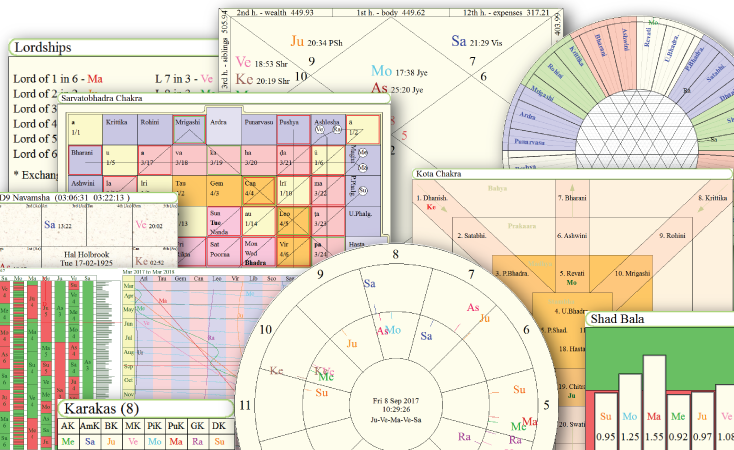
Parashara's Light 9.0 (Windows)  is now available in English, Hindi, Gujarati, Marathi, Odia, Bengali, Assamese, Kannada, Tamil, Telugu & Punjabi
Parashara's Light 9.0 (Mac) is available in English, Hindi, Gujarati, Marathi, Odia, Bengali, Assamese, Kannada, Tamil, Telugu & Punjabi.
Anka Jyotish in English, Hindi, Gujarati, Marathi, Bengali, Kannada & Telugu.
Vedic Vaastu is available in English, Hindi, Gujarati, Marathi, Bengali, Kannada, Tamil & Telugu. is now available in English, Hindi, Gujarati, Marathi, Odia, Bengali, Assamese, Kannada, Tamil, Telugu & Punjabi
Parashara's Light 9.0 (Mac) is available in English, Hindi, Gujarati, Marathi, Odia, Bengali, Assamese, Kannada, Tamil, Telugu & Punjabi.
Anka Jyotish in English, Hindi, Gujarati, Marathi, Bengali, Kannada & Telugu.
Vedic Vaastu is available in English, Hindi, Gujarati, Marathi, Bengali, Kannada, Tamil & Telugu.
|
|
|
|
|
|
|
|
|
Parashara's Light 9.0
|
|
It features a wealth of calculations, charts, tables, and interpretive reports.
|
|
|
|
Parashara's Light
Android Version
|
|
It is the ultimate and the most innovative Vedic Astrology Software for mobile phones & tablets! .
|
|
|
|
Vedic Vaastu 2.0
|
|
Traditional Vaastu for Modern Builds!
|
|
|
|
Anka Jyotish
|
|
Anka Jyotish software is for predictions based on numerological calcuations.
|
|
|
|
Vedic Astrology Bookshelf 1.2
|
|
Vedic Bookshelf is a classical Vedic Library at your fingertips.
|
|
|
|
Shri Muhurta
|
|
Automatically finds the most favorable time and date for any occasion.
|
|
|
|
|
|
Generate your Birth Star, Birth Chart, Mangala Dosha, Compatibility and Gem Recommendation Reports
Free and Instantly
from Instant Reports section on
Astrojeevan.com
|
|
|
|
|
51972 [Bonus Inside]
Power is the currency of the elite. Those with substantial wealth often have the means to influence policy through lobbying, campaign contributions, and control over media and information. This creates a feedback loop where the interests of the powerful are prioritized in legislation, further entrenching their economic advantages. Conversely, marginalized social classes often feel a sense of "powerlessness," as their voices are frequently drowned out in the political arena. Understanding this dynamic is crucial for analyzing how social structures persist despite widespread calls for equality. The Impact on Social Mobility
The Architecture of Inequality: Wealth, Power, and Social Class Power is the currency of the elite
The distribution of wealth is rarely equitable. In many developed nations, a significant portion of total national assets is held by a small percentage of the population. This concentration of wealth does not just provide a financial safety net; it creates a "wealth gap" that affects every facet of life, from education to healthcare. Those born into wealth have access to elite institutions and social networks—often referred to as social capital—that facilitate professional success. In contrast, those in lower social classes often face systemic barriers, such as underfunded schools and lack of credit, which make escaping the cycle of poverty a monumental task. Power as a Function of Social Class Conversely, marginalized social classes often feel a sense
Social class, wealth, and power are inextricably linked, forming a tapestry of inequality that defines the human experience. To address these disparities, society must look beyond individual effort and examine the structural mechanisms that protect the interests of the few at the expense of the many. Only by understanding the anthropology of intensity and the systemic nature of these hierarchies can we begin to move toward a more equitable distribution of both capital and influence. In many developed nations, a significant portion of
In modern society, social class is more than just a label of economic status; it is a fundamental architecture that dictates an individual’s access to resources, opportunities, and influence. At the heart of this structure lies the complex relationship between wealth and power—two forces that are often self-reinforcing. While "wealth" refers to the accumulation of assets and capital, "power" is the ability to influence others and shape the social and political landscape. Together, they create a stratified system where the elite often hold the keys to systemic change, while lower classes navigate a reality defined by limited social mobility. The Concentration of Wealth and Opportunity |
|
|